
"coffee bean maturity"
7000 article(s) found

The most complete coffee beans are picked from trees to roasted and matured, washed, sunburned in Brazil, etc.
After the planting and harvest of the manor, the next step is the most important step in addition to the variety and planting land: "post-harvest treatment". At present, most of the treatment methods are mainly sun exposure, semi-washing and water washing, and there are also several special treatment methods: honey treatment, in vivo treatment, and so on. Many people are sharing these treatments on the Internet, no matter how I write them.
About the coffee fruit.
The fruit is a berry, also known as comb fruit. Oval, 9-14 mm long, young fruit green, red at maturity, purplish red. Each fruit generally has two seeds, but also one or three, showing a semi-oval, there is a longitudinal groove, called grooves. The structure of a fruit in which the exocarp consists of a thin layer of hardwood human cells with stomata; the mesocarp (that is, pulp) is large and Lignified by several layers of polygons.

What kind of coffee is the best? Blue Mountain Coffee? What kind of expensive coffee do you have
The best way to harvest high-quality coffee beans is to harvest them manually. That is, only mature coffee fruits are picked to prevent coffee fruits with inconsistent maturity from being picked at the same time. Because those unripe and overripe fruits will affect the balance and stability of coffee taste, boutique coffee needs to be picked frequently and carefully during harvest. Jamaica Blue Mountain Coffee (Jamaican B)

Introduction to the producing areas of grinding degree varieties by the method of flavor characteristic treatment of Brazilian Hilado coffee beans
Brazilian coffee beans if you are taking harvest coffee cherries ripe long-awaited sister rarely for many days is a mature change, the new stage has no meaning. Be careful not to get rid of beans just ripe persimmons ripe down, leaving less damage caused by the coffee tree harvester vibration. 2 hand-picked coffee beans hand-picked mature coffee beans in the coffee treatment Serrado is harvested from
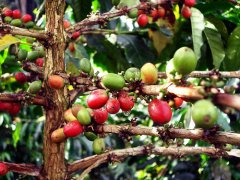
How to grow coffee berries and beans
Coffee fruit is a berry, also known as comb fruit. Oval, 9-14 mm long, young fruit green, red at maturity, purplish red. Each fruit generally has two seeds, but also one or three, showing a semi-oval, there is a longitudinal groove, called grooves. This is the past life of coffee beans, there are coffee branches, leaves, fruits, as well as dissected pulp, seeds, roasted coffee beans. What we see every day
Talk about the classification of color characteristics of raw coffee beans
Types and characteristics of raw coffee beans Type A White type is characterized by low water content, overall white, high maturity, mixed bean granule size and thin bean-shaped flat meat. The bean surface is not concave and convex, and has a smooth touch; it is mostly produced in lowlands or medium and high places, with weak sour taste and less aroma. Therefore, even if we use light baking to moderate baking, the sour taste will not be particularly prominent.
Boutique coffee basic knowledge coffee fruit
The fruit is a berry, also known as comb fruit. Oval, 9-14 mm long, young fruit green, red at maturity, purplish red. Each fruit generally has two seeds, but also one or three, showing a semi-oval, there is a longitudinal groove, called grooves. The structure of a fruit in which the exocarp consists of a thin layer of hardwood human cells with stomata; the mesocarp (that is, pulp) is large and Lignified by several layers of polygons.
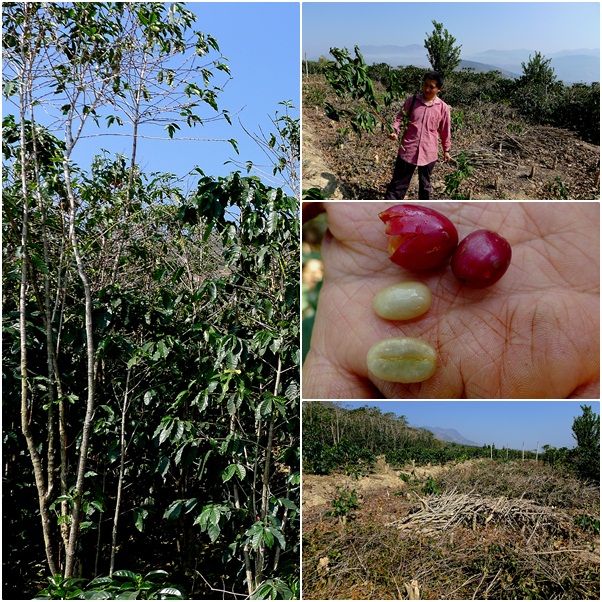
Ethiopian Konga Ethiopian Solar method High-shelf Solar method Sida, Ethiopia
About the Ethiopian sun exposure (high-shelf sun exposure): in the past, the Ethiopian sun exposure was to spread wild coffee fruits directly on the mud ground for exposure. This method has two disadvantages: 1. After picking, the beans have not been specially screened and treated, the uneven appearance and maturity are mixed together, and the process is relatively rough, so the quality of coffee beans is unstable.

Introduction to the producing area of Ethiopian Sunshine Sidamo Coffee Flavor description Grinding scale treatment
In the past, the Ethiopian sun exposure method used to spread wild coffee fruits directly on the mud ground for exposure. This method has two disadvantages: 1. After picking beans without special screening and treatment, uneven appearance and maturity are mixed together, the process is relatively rough, so the quality of coffee beans is unstable and prone to defective beans. two。 Coffee farmers usually live directly.

A brief introduction to the description of the flavor and aroma characteristics of transparent and pure candle candle boutique coffee beans
With the support of 90 + technology, Drima Zede only selects the most mature coffee cherries by hand, and the sun drying process takes pains to keep stirring to ensure uniformity. The end result is a very transparent and pure taste, which varies greatly from hot to cold, and the aromas of fruit, flowers and oak are very attractive Levelup.
Roasting and taste of coffee beans from different origins
Panama SHB has a good aroma and taste. Aromas are also so-called high and low, while Panama coffee beans are high, taste balance is good, some acid, high maturity and uniform bean quality. Beans thin meat, so with good heat, not easy to produce uneven baking situation. The taste purity is high, the beans have no different size state, so there is no miscellaneous taste. big

A brief introduction to the history and culture of the origin and development of San Juan Xido boutique coffee beans in Honduras
High-quality coffee in Honduras uses water washing to deal with coffee beans, usually after soaking, when the defective fruit will surface, it can be discarded first. Then put the good fruit into the fruit peeling machine and peel off the peel with the rotating force of the machine. Peeled fruits are screened by machines to select fruits of high quality. Usually the bigger.

Coffee bean harvesting and processing Fine coffee bean processing
Every winter (dry season) is the harvest period of coffee beans, coffee trees after three to four years of growth, gradually mature, began to bear fruit, fruit next to the branches arranged in a string or cluster. Coffee beans wrapped in red skin inside, as soon as red can be picked. Most Arabica beans mature between June and August, and Roberto beans between September and October. Therefore,

Pure and fragrant Puerto Rican coffee taste the characteristics of San Pedro Manor
It tastes long. This kind of coffee is very expensive and its flavor is comparable to that of any other coffee variety in the world. In the Yauco area, the coffee is owned and operated by local planters. The mountain climate here is mild, the plants have a long mature period (from October to February), and the soil is of high quality clay. Some old varieties of Arabica coffee beans are grown here, although the yield is higher.

The way coffee beans are treated after picking.
Every winter (dry season) is the harvest time for coffee beans. After three to four years of growth, coffee trees mature and begin to bear fruit. The fruits are arranged in a string or clustered together next to the branches. Coffee beans are wrapped in red skins and can be picked as soon as they turn red. Most Arabica coffee beans mature from June to August and Roberts coffee beans from September to October. therefore,
Fine Coffee Coffee basic knowledge introduction Coffee Fruit
The fruit is a berry, also known as comb fruit. Oval, 9-14 mm long, young fruit green, red at maturity, purplish red. Each fruit generally has two seeds, but also one or three, showing a semi-oval, there is a longitudinal groove, called grooves. The structure of a fruit in which the exocarp consists of a thin layer of hardwood human cells with stomata; the mesocarp (that is, pulp) is large and Lignified by several layers of polygons.

The unique lip peeling technology of "kiss first coffee" in Yunnan
Kiss the first coffee inspiration, with 30 years of coffee production and processing experience, the invention of fresh fruit coffee processing patents, the development of kiss first coffee. It makes up for the deficiency that the peeling process of the machine coffee fruit can not achieve the classification and screening in the initial processing stage of coffee. Through the lip peeling process, we can better optimize the coffee manually, select the mature and full fresh coffee fruit, and strengthen the people in the follow-up deep processing.

Hawaiian boutique coffee mocha kind of coffee drink
The best way to harvest high-quality coffee beans is to harvest them manually. That is, only mature coffee fruits are picked to prevent coffee fruits with inconsistent maturity from being picked at the same time. Because those unripe and overripe fruits will affect the balance and stability of coffee taste, boutique coffee needs to be picked frequently and carefully during harvest. Coffee in Hawaii is one of the 50 states in the United States

A brief introduction to the history and culture of the origin and development of San Juan Xido boutique coffee beans in Honduras.
The term "fine coffee" was first put forward by Ms. Knudsen of the United States in Coffee and Tea magazine. At that time, Ms. Knudsen, as a coffee buyer at B.C. Ireland in San Francisco, was very dissatisfied with the neglect of the quality of raw coffee in the industry, and even some big roasters mixed a large amount of Robesda beans in the comprehensive beans, so she put forward the concept of boutique coffee.

With mild, supple and balanced taste, introduction to Puerto Rico Coffee Bean Manor
The aroma is comparable to that of any other kind of coffee in the world. In the Yauco area, the coffee is owned and operated by local planters. The mountain climate here is mild, the plants have a long mature period (from October to February), and the soil is of high quality clay. Some old varieties of Arabica coffee beans are grown here, although the yield is lower than other varieties, but generally of high quality. this